Sakura Agate: The Romantic Charm of Spring Hidden in a Gemstone - A Comprehensive Guide to This Pink Wonder
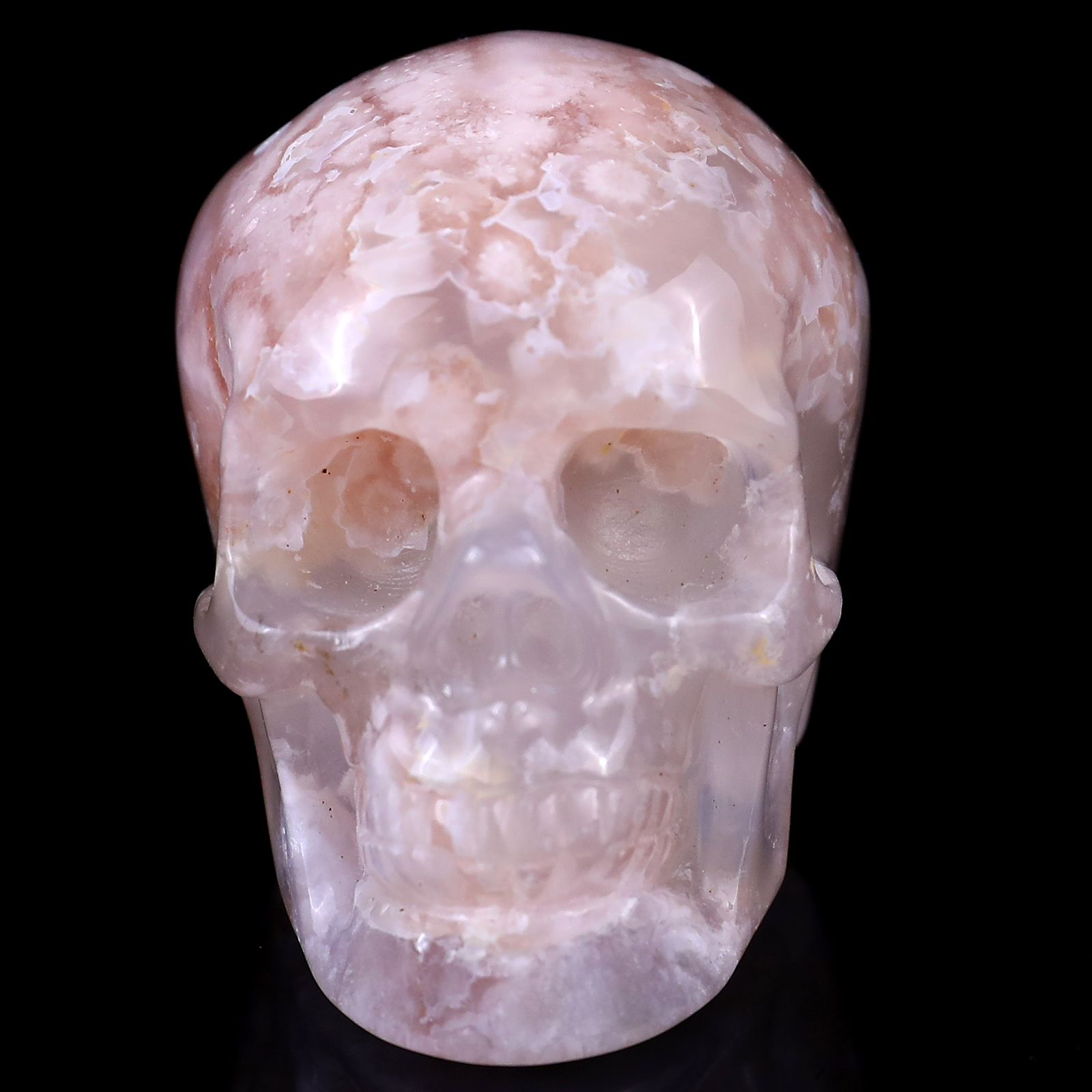
When talking about agate, most people first think of classic red agate, black agate, or regular varieties with banded patterns. However, in recent years, a type of agate with a "spring-like filter" has quietly gained popularity—it is Sakura Agate. With its patterns resembling blooming cherry blossoms and soft, healing pink hues, Sakura Agate has become a rising star in the jewelry world. It has not only won the hearts of countless women but also secured a place in the collection circle. Today, we will unlock the unique charm of Sakura Agate from all aspects, including its definition, formation, characteristics, identification, value, maintenance, and cultural connotations.
I. First Introduction to Sakura Agate: A Gemstone That Is Not "Cherry Blossom" but Surpasses Cherry Blossom in Charm
First, it is important to clarify that Sakura Agate is neither a "cherry blossom fossil" nor a "combination of agate and cherry blossoms." Instead, it is a special-patterned variety in the agate family. Its scientific name is "Rhodonite Agate" (some varieties are also associated with rhodonite due to their manganese content), and its core component is still silica, the same as ordinary agate.
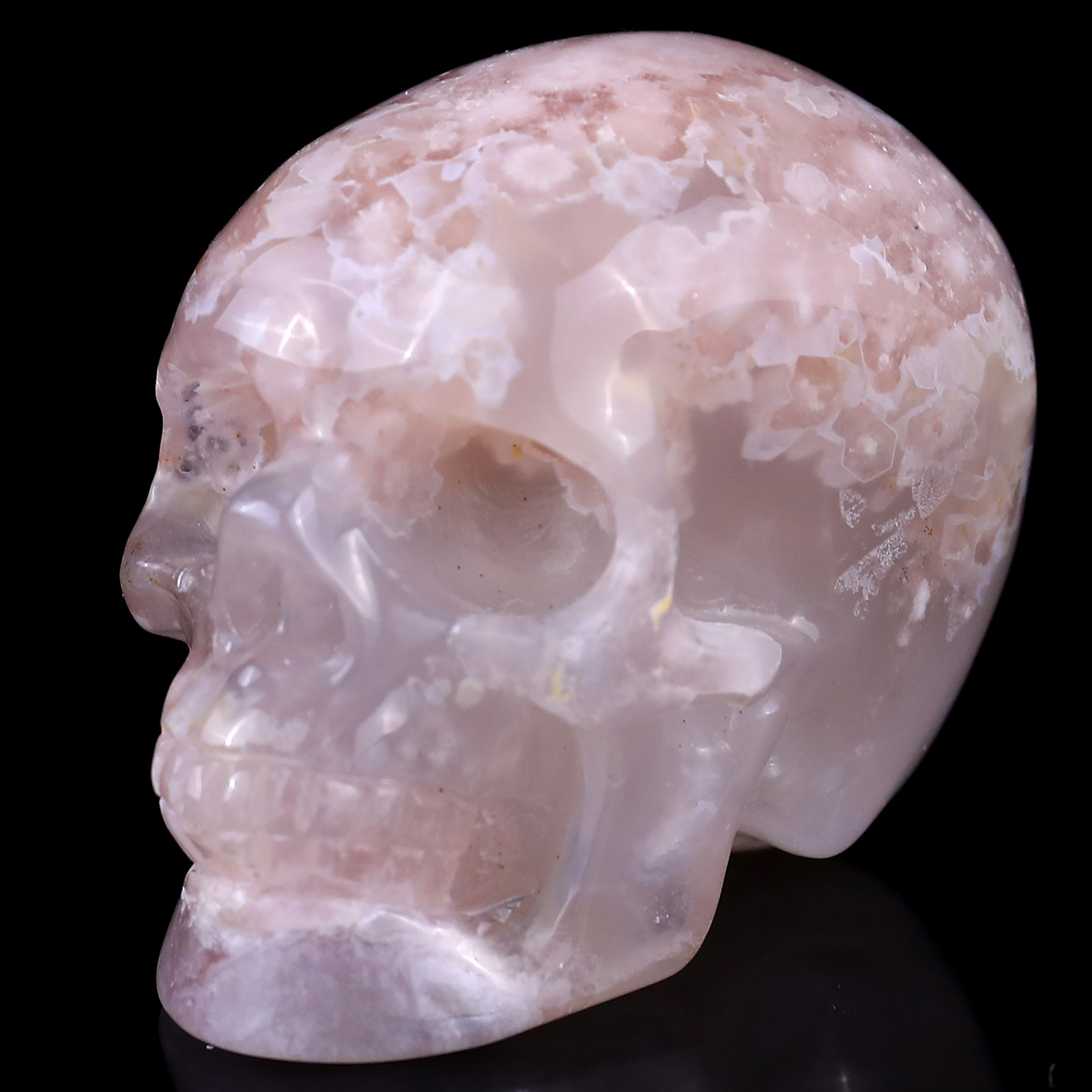
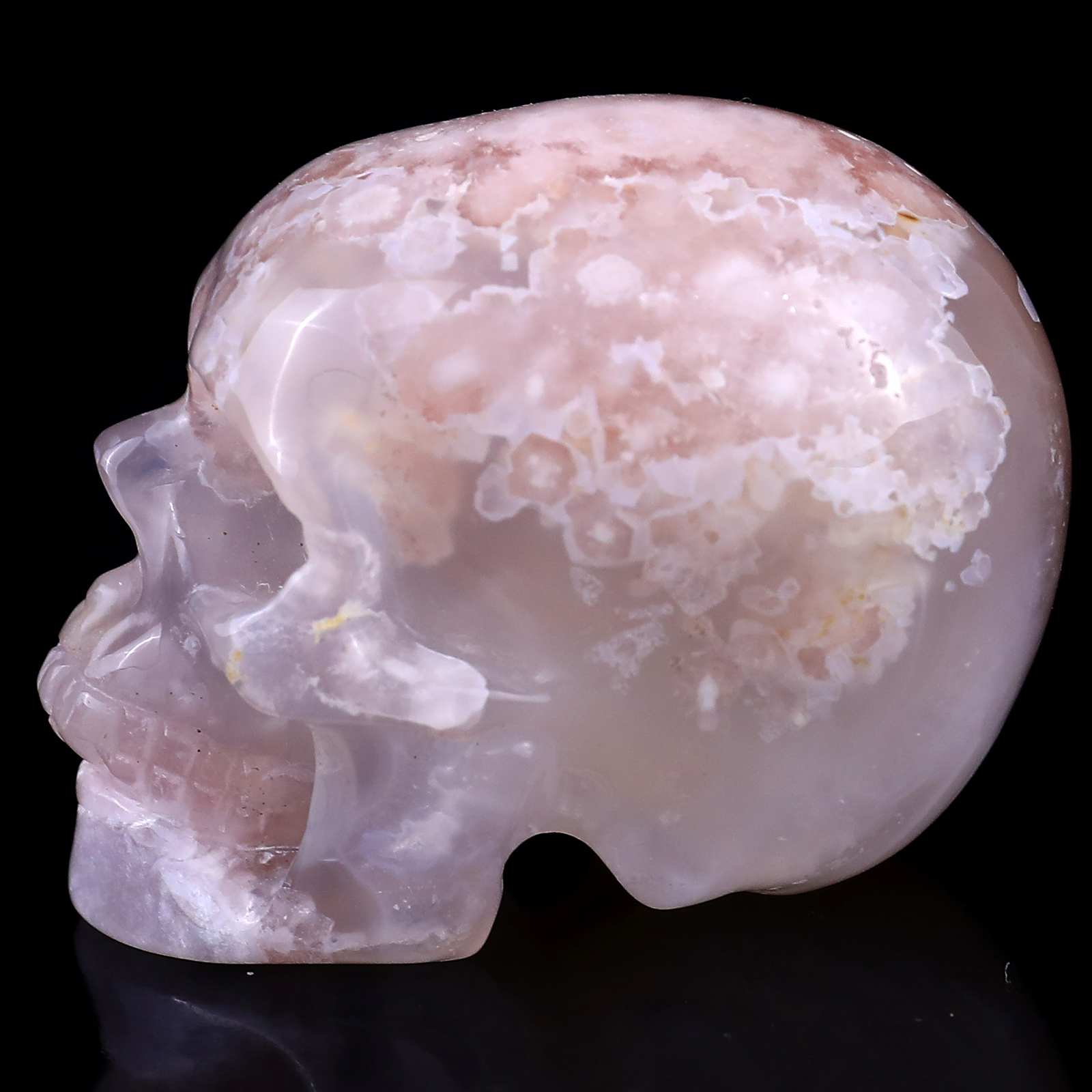
The reason it is called "Sakura Agate" lies entirely in its unique appearance: its base color is mostly transparent white, light gray, or pale pink, with irregular pink and light purple "flower spots" distributed inside. Some of these spots look like budding cherry blossom buds, some like cherry petals floating in the wind, and others cluster together like blooming cherry blossom clusters on branches. When light shines through it, it seems to freeze the entire spring cherry blossom shower, exuding a strong sense of romance.
In terms of origin, the core producing area of Sakura Agate is concentrated in Madagascar (over 90% of the world's high-quality Sakura Agate comes from here). There are also small-scale productions in India, Brazil, and other places, but their pattern fullness and color intensity are far inferior to those of Madagascan materials. Due to its special formation environment, Madagascan Sakura Agate has clearer "flower patterns" and cleaner base colors, making it the mainstream choice in the current market.
II. The Formation of Sakura Agate: A "Spring Gift" from Hundreds of Millions of Years of Geological Movements
A piece of agate that can present "cherry blossom patterns" is the result of a geological coincidence spanning hundreds of millions of years. To understand its formation, we need to break it down step by step from the general formation logic of agate to the special causes of the "cherry blossom patterns":
1. Formation of the Agate Base: Volcanic Activity and Silica Precipitation
The "base" (i.e., the agate part) of Sakura Agate was formed during the Mesozoic to Cenozoic eras, a period of active volcanic activity. At that time, the Madagascar region was located at the boundary of tectonic plates. Frequent volcanic eruptions brought silica magma (molten quartzite) from underground to the surface. After cooling, part of this magma formed quartzite, and the other part seeped into the cracks of rocks and slowly crystallized—this is the embryonic form of agate.
Unlike ordinary agate, when Sakura Agate was forming, the surrounding rocks happened to contain trace elements such as manganese, iron, and calcium. These elements dissolved in the silica solution, laying the "pigment" foundation for the subsequent formation of "cherry blossom patterns."
2. The Birth of "Cherry Blossom Patterns": The "Accidental Beauty" of Two Crystallization Processes
The "flower spots" of Sakura Agate are not formed in one go but go through a complex process of "base crystallization → crack filling → secondary crystallization":
Step 2: After the base is formed, the rock develops fine new cracks again. At this time, the silica solution containing manganese (manganese makes minerals appear pink and purple) seeps into these new cracks again;
Step 3: Due to sudden changes in temperature and pressure, the infiltrated manganese-containing silica solution cannot spread evenly and can only crystallize quickly locally, forming irregular massive and flocculent mineral aggregates—these aggregates are the "cherry blossom spots" we see.
Precisely because this process is full of uncertainties (the size of cracks, element concentration, and crystallization speed are all uncontrollable), there are no two identical pieces of Sakura Agate in the world. Each piece is a "unique spring limited edition."
III. Core Characteristics of Sakura Agate: Understanding Its "Uniqueness" from Patterns to Hardness
To have a comprehensive understanding of Sakura Agate, it is essential to deeply understand its appearance characteristics and physical properties—this is not only the key to appreciating it but also the basis for subsequent identification and maintenance.
1. Appearance Characteristics: The "Triple Aesthetics" of Patterns, Colors, and Transparency
The beauty of Sakura Agate lies in the combination of "patterns, colors, and transparency," and different combinations create different "beauty levels":
According to the shape of the "cherry blossom spots," they can be divided into three categories:
① Drifting flower patterns: Pink spots are sparsely scattered, like petals floating in the wind, agile and light, suitable for people who like a minimalist style;
② Clustered flower patterns: Spots gather in clusters, forming a shape similar to "cherry blossom clusters," with clear flower shapes and distinct boundaries, making them a popular style in the market;
③ Blooming flower patterns: Spots are dense and cover a wide range, almost filling the entire agate. Some even form "three-dimensional flower shapes" (due to mineral stacking during crystallization), with the highest rarity and collection value.
Note: The patterns of natural Sakura Agate are irregular. If the patterns are too symmetrical and uniform, they may be artificially counterfeited.
The best base color is "pure white and transparent" (known as the "ice-like base"), which can highlight the pink flower spots to the greatest extent; if the base color is grayish or yellowish, it will appear dull.
The most valuable flower spot colors are "deep cherry pink and pale rose pink." The higher the color saturation and uniformity, the closer it is to the color of real cherry blossoms; if there are purple or orange tones, it is also normal (due to different contents of trace elements), but we need to be alert to "dead black" or "dead white" spots (which may be impurities or artificial dyeing).
High-quality Sakura Agate has high transparency, allowing light to pass through easily. The flower spots show a "semi-transparent feeling" under light, as if floating inside the agate; if the transparency is low and there are too many internal cotton-like inclusions (residues from silica crystallization), it will appear cloudy and reduce its beauty.
2. Physical Properties: Inheriting the "Toughness" of Agate with Slight Differences
As a member of the agate family, Sakura Agate inherits most of the physical properties of agate, but there are slight differences due to the presence of trace elements:
It is close to ordinary agate (Mohs Hardness 7) and higher than glass (Mohs Hardness 5.5), so it is not easily scratched during daily wear. However, it is necessary to avoid collision with gemstones of higher hardness such as diamonds and corundum (which may cause cracks).
It is slightly lighter than ordinary jade (e.g., Hetian jade has a density of 2.95g/cm³), so it does not feel heavy when worn, making it suitable for making close-fitting jewelry such as bracelets and pendants.
After high-quality polishing, high-quality Sakura Agate shows a bright vitreous luster, and the flower spots have a "fluorescence effect" under light; if the polishing is rough, it shows a waxy luster, which greatly reduces the texture.
Although its toughness is slightly worse than that of jadeite (high toughness), it is tougher than crystal (high brittleness). As long as it is not dropped or hit hard during daily wear, it will not be easily damaged.
IV. Identification of Sakura Agate: 3 Tips to Avoid "Artificial Traps" and Buy Natural Good Products
With the increasing popularity of Sakura Agate, there are many artificially counterfeited and optimized products (such as dyed, glued, and spliced ones) in the market. Learning to identify them is crucial. The following 3 practical methods can help you easily distinguish between natural and artificial Sakura Agate:
1. Check the Patterns: Natural Ones Are "Disordered," Artificial Ones Are "Stiff"
This is the core identification point. The "cherry blossom spots" of natural Sakura Agate are formed by random crystallization of minerals, with irregular patterns, blurred edges (showing a gradual effect), and a natural transition between the flower spots and the base color;
Artificially counterfeited Sakura Agate (mostly dyed ordinary white agate) usually has patterns that are "printed" or "painted." The edges of the flower spots are clear and the shapes are symmetrical (such as repeated circles and petal shapes). Moreover, the color will concentrate along the cracks (residues of dyes), and "color concentration marks" (traces of color accumulation) can be found with a magnifying glass.
2. Test the Hardness: Natural Ones Can Scratch Glass, Artificial Ones Are Easy to Wear
Take a sample to be identified and scratch it gently on glass:
Note: Use light force during the test to avoid damaging the sample.
3. Examine the Luster and Weight: Natural Ones Are "Ice-Transparent and Warm," Artificial Ones Are "Cloudy and Heavy"
Luster: Natural Sakura Agate (especially those with an ice-like base) has a bright luster, and the flower spots have a "floating feeling" when light passes through; artificially glued or dyed samples have a dull luster, and "glue lines" (residues of glue) or uneven color distribution can be seen when light passes through.
Weight: Natural Sakura Agate has a stable density (2.6-2.7g/cm³). Under the same volume, it is heavier than resin counterfeits (density 1.1-1.3g/cm³) and slightly heavier than glass counterfeits (density 2.5g/cm³). When held in the hand, it has a "warm and heavy feeling" rather than being "light" or "excessively heavy."
V. Value Evaluation of Sakura Agate: 4 Key Factors Determining Its "Value"
The price of Sakura Agate ranges from tens of yuan to tens of thousands of yuan. The difference mainly comes from four factors: "patterns, colors, transparency, and craftsmanship." The specific evaluation standards can refer to the following:
1. Patterns: "Integrity of Flower Shape" Is the Core
Top-grade: Clear flower shapes (such as complete cherry blossom clusters), uniform distribution (neither clustered nor sparse), and no impurities (no black spots or cotton-like inclusions). The price of such Sakura Agate (e.g., "full-flower ice-base bracelets") can reach thousands to tens of thousands of yuan;
Mid-grade: Relatively clear flower shapes, but slightly uneven distribution (e.g., dense in some parts and sparse in others) or with a small amount of cotton-like inclusions. The price ranges from hundreds to thousands of yuan;
Low-grade: Blurred flower shapes (e.g., "fog-like flower spots"), messy distribution, or with a large number of impurities. The price is mostly from tens to hundreds of yuan.
2. Colors: "Purity of Base Color + Saturation of Flower Spots" Must Meet Standards
3. Transparency: "Ice-Transparent and No Cotton" Is a Bonus
The higher the transparency, the better the light transmittance, and the stronger the "floating feeling" of the flower spots, so the higher the value. For example, for Sakura Agate with the same pattern and color, the price of an ice-base (fully transparent) one is more than 50% higher than that of a semi-transparent one (partially cloudy), and the price of a semi-transparent one is more than 30% higher than that of an opaque one (completely non-transparent).
4. Craftsmanship: "No Defects + Regular Shape" Increases Premium
Sakura Agate is mostly made into bracelets, pendants, and beads (bracelets). The impact of craftsmanship on value is mainly reflected in:
Bracelets: Regular ring size (no deformation), smooth edges (no burrs), no cracks (especially "internal cracks"), and "flower patterns" on the outer side of the bracelet (visible when worn). The price of such bracelets is 2-3 times higher than that of bracelets with "flower patterns on the inner side" or cracks;
Pendants: Symmetrical shape (e.g., round, teardrop-shaped), fine polishing, and "flower patterns" in the center of the front of the pendant. The price is 30%-50% higher than that of pendants with irregular shapes;
Bracelets (beaded): Uniform bead size (error no more than 0.5mm), no damage, and each bead has a clear flower pattern ("full-flower beaded bracelet"). The price is 1-2 times higher than that of "mixed-flower beaded bracelets" (some beads have no flowers).
VI. Wearing and Maintenance of Sakura Agate: Making the "Spring Romance" Last Longer
Although Sakura Agate is tough, improper daily wearing and maintenance will still affect its beauty and service life. The following 5 maintenance tips should be kept in mind:
1. Avoid "Hard Collisions" to Prevent Cracks
Although Sakura Agate has high hardness, its toughness is moderate. During wearing, avoid collision with hard objects (such as door handles, tabletops), and do not wear it together with other jewelry (such as diamond rings, metal bracelets) on the same wrist to prevent mutual wear or cracks caused by collision. When storing, put it in a jewelry box separately (preferably with a soft cloth pad) to avoid extrusion.
2. Keep Away from "Chemicals" to Prevent Corrosion
The surface of Sakura Agate has fine pores, which are easy to absorb chemicals, leading to dull colors or damaged patterns. During daily wearing, avoid contact with cosmetics (such as liquid foundation, lipstick), skin care products (such as face cream, perfume), and detergents (such as dish soap, laundry detergent). Take off the Sakura Agate jewelry before bathing, applying makeup, or doing housework.
3. Clean "Gently and Softly" to Avoid Damage
If the surface of Sakura Agate is stained with dust or oil, wipe it gently with a soft cloth (such as suede cloth, eyeglass cloth) dipped in warm water. Use light force when wiping to avoid hard friction; do not scrub with a brush (such as a toothbrush) or use an ultrasonic cleaner (which may break small internal cracks), so as not to damage the surface luster or patterns.
4. Avoid "Extreme Environments" to Prevent Deterioration
Sakura Agate is afraid of high temperatures and direct sunlight. Do not place it in a place exposed to direct sunlight for a long time (such as a windowsill) or near high-temperature sources (such as heaters, stoves), otherwise, the internal moisture will be lost, resulting in "dry lines" and affecting transparency; at the same time, it is also afraid of sudden temperature changes (such as entering a warm room directly from the cold outdoors), to avoid cracks caused by thermal expansion and contraction.
5. Regular "Maintenance and Soaking" to Keep It Warm and Moist
For Sakura Agate that is not worn for a long time, soak it in warm water for 10-15 minutes regularly (such as once a month), then dry it with a soft cloth, and apply a small amount of baby oil (or jewelry-specific maintenance oil) to wipe the surface gently. This can effectively replenish moisture, keep its warm luster, and prevent dry cracking.
VII. Cultural Connotations of Sakura Agate: More Than Decoration, It Is an "Emotional Carrier"
The charm of Sakura Agate lies not only in its external beauty but also in its inherent cultural connotations—it combines the "romance of cherry blossoms" with the "protection of agate" and becomes a "gem messenger" for conveying emotions:
1. Symbol of "Spring Hope": Healing and Rebirth
Cherry blossoms are a symbol of spring, representing "rebirth, hope, and beauty." Sakura Agate freezes this "spring atmosphere." Wearing it seems to bring "spring" with you, especially suitable for wearing during low periods, as it can bring a sense of healing, implying "saying goodbye to the past and embracing a new start."
2. Symbol of "Romantic Love": Sweetness and Longevity
Cherry blossoms are often associated with "romantic love," and the pink hue of Sakura Agate also has a "soft filter." Therefore, it is often used as a couple's token. Giving a piece of Sakura Agate jewelry to a lover implies "love as sweet as cherry blossoms and as tough and long-lasting as agate," which is especially suitable for gifting on Valentine's Day or anniversaries.
3. Symbol of "Protection and Peace": The Traditional Meaning of Agate
In traditional culture, agate is regarded as a gemstone for "warding off evil spirits and protecting," which can "purify negative emotions and bring peace." Sakura Agate inherits this meaning. In addition, its gentle energy (believed to relieve anxiety and irritability) makes it suitable for students and office workers to wear, implying "protecting peace and maintaining a calm mind."
4. Symbol of "Unique Self": Each Piece Is an "Exclusive Mark"
As mentioned earlier, there are no two identical pieces of Sakura Agate in the world. The pattern and color of each piece are unique—this also makes it a symbol of "unique self." Wearing Sakura Agate seems to declare "I am unique and do not need to imitate others," which is in line with the "personalization" pursuit of contemporary young people.
VIII. Conclusion: Sakura Agate Is More Than a "Internet-Famous Gemstone" but a "Spring Memory" Worth Collecting
Some people say that Sakura Agate is an "internet-famous gemstone" and its popularity will eventually fade. However, those who truly understand it know that its beauty is not limited to its "appearance"—the unique patterns created by hundreds of millions of years of geological movements, the tough texture of natural gemstones, and the romantic and protective connotations all make it surpass the label of "internet-famous" and become a piece of jewelry worth collecting and inheriting.
Whether as a daily decoration, a token for expressing emotions, or a collection of niche gemstones, Sakura Agate can bring surprises. It is like a "messenger of spring," integrating the romance of cherry blossoms with the preciousness of gemstones, allowing everyone who owns it to touch the "beauty of spring" at any time.
If you are also moved by this "cherry blossom shower hidden in a gemstone," you might as well try to own a piece of Sakura Agate that belongs to you—believe me, when it shimmers with pink light under the sun, you will understand: this romance is worth collecting.


