Quote
Subtotal: $0

Views: 0 Author: Site Editor Publish Time: 2025-09-30 Origin: Site
You may see crystal skulls as mysterious objects that symbolize power, wisdom, and the afterlife. People often debate where these skulls come from. Some claim they belong to ancient Aztec or Maya civilizations. Legends say exactly thirteen crystal skulls exist, scattered around the world. The most famous one, the Mitchell Hedges skull, was found in Belize in 1927. You find a mix of history and myth every time you encounter crystal skulls.
Many claim crystal skulls have ancient origins.
Stories link them to lost civilizations and secrets.
Crystal skulls continue to spark curiosity and debate among historians and collectors.
Crystal skulls are often linked to ancient civilizations, but most are modern creations from the 19th century.
Scientific tests reveal that many crystal skulls lack authenticity, showing signs of modern manufacturing techniques.
In Mesoamerican cultures, skulls symbolize life and death, playing a key role in rituals and celebrations like the Día de Muertos.
Crystal skulls are seen as vessels of wisdom and healing, often used in spiritual practices for meditation and energy work.
The mystery surrounding crystal skulls fuels their popularity in pop culture, inspiring stories of adventure and the unknown.
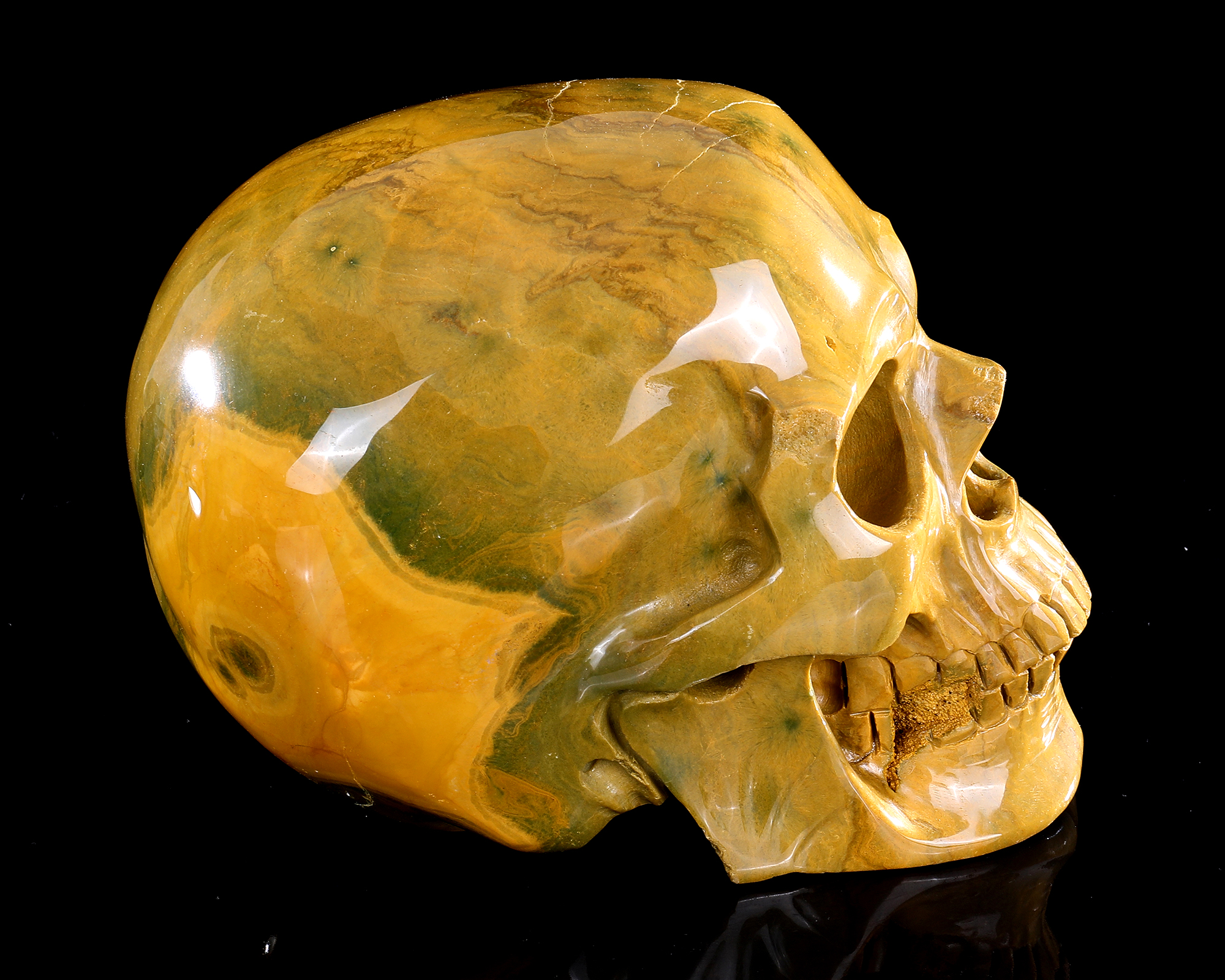
You may wonder about the true origin of crystal skulls. Many experts believe that most crystal skulls did not come from ancient mesoamerican civilization. Instead, you find strong evidence pointing to German craftsmanship in the late 19th century. When you look closely at these artefacts, you see tool marks that match modern jeweler's wheels. Researchers like Jane Walsh discovered that all crystal skulls were carved using lapidary wheels and industrial diamonds, not the stone tools used by ancient cultures.
The British Museum found rotary tool marks on their crystal skull.
Advanced scientific tests, such as scanning electron microscopy and X-ray diffraction, confirmed the use of modern techniques.
The skulls lack the artistic style of Aztec or Mixtec artefacts.
Historical records show that crystal skulls appeared suddenly in Europe during a time when collectors wanted exotic archaeological artifacts.
You see that scientific analysis makes it clear: these artefacts are not ancient crystal skulls, but products of modern European workshops.
Museums around the world display crystal skulls, but you should know that their authenticity remains controversial. Experts have questioned these artefacts since the 1930s. Most did not come from documented archaeological sites, which raises doubts about their origin. Scientists use advanced methods to study these skulls, and their findings often point to modern fabrication.
Evidence Type | Description |
|---|---|
Authenticity Doubts | Experts have questioned the authenticity of the skulls since the 1930s, noting they did not come from documented archaeological sites. |
Surface Analysis | Scanning electron microscopy revealed that authentic artifacts have irregular etch marks, while the skulls have regular etch marks, indicating they were made with modern tools. |
Mineral Inclusions | Raman spectroscopy found iron-rich chlorite inclusions in the British Museum's skull, which are not found in Mexican crystal, suggesting a non-Mexican origin. |
Synthetic Residue | X-ray diffraction identified silicon carbide in the Smithsonian skull, indicating it was made in the mid-20th century, long after the pre-Columbian era. |
Water Penetration Dating | A noninvasive method showed the crystal skull was likely made after the Spanish conquest, contrasting with the anthropomorphic head made in pre-Columbian times. |
You notice that these scientific tests reveal regular etch marks and synthetic residues, which do not match ancient artefacts. Museums continue to display these crystal skulls because people find them fascinating, but most experts agree that they are fake crystal skulls rather than genuine archaeological artifacts.
Note: Museums keep these artefacts on display due to public interest, even though most scientists believe they are modern creations.
You may have heard dramatic stories about the discovery of crystal skulls. The Mitchell-Hedges skull is the most famous example. People claimed it was found in Belize in 1927, but archival research shows it first appeared in London in 1933. Smithsonian anthropologist Jane Walsh used microscopic examinations to prove that this artifact was carved with high-speed, diamond-coated tools. These tools did not exist in ancient mesoamerican civilization. Her research shows that the skull is a product of the 20th century, not an ancient crystal skull.
The debate over the origin of crystal skulls continues. Some people believe in their ancient power, but scientific analyses show that most are modern forgeries. Electron microscope examinations reveal clear signs of contemporary manufacturing. The British Museum and Smithsonian Institution have concluded that no authentic crystal skulls have ever been found in true archaeological contexts.
You see that the controversy over these artefacts remains strong. Recent investigations show that archaeologists largely agree: many crystal skulls are fakes. Museums still display them because they spark curiosity, but you should know that the evidence points to modern origins.
You might expect to find ancient aztec crystal skulls in museums, but most experts agree that none have been verified as authentic through archaeological excavations. When you look at museum collections, you see several crystal skulls labeled as Aztec, but archaeologists consider almost all of them to be fakes. The actual number of documented aztec crystal skulls remains unclear, and no one has found a genuine example in a controlled dig.
Aztec culture placed great importance on skulls. You can see this in their religious art and rituals. Skulls appeared as major symbols in mesoamerican artwork, representing life, fertility, and regeneration. The Aztecs carved human skulls into stone and used them in ceremonies. They even built a monumental tower from real human skulls, showing how deeply these symbols influenced their society.
Most documented aztec crystal skulls are considered fakes, with no authentic examples from archaeological excavations.
The historical significance of these skulls is linked to their role in Aztec culture, especially in religious art and rituals.
Skulls were major iconographic elements in Aztec religious art, symbolizing life, fertility, and regeneration.
You see that while aztec crystal skulls fascinate many people, their true origin remains a mystery. The fascination comes more from legend than from proven history.
When you explore the meaning of mesoamerican crystal skulls, you discover a deep connection between life and death. In Aztec, maya, and Toltec cultures, skulls played a central role in rituals and celebrations. The Day of the Dead, or Día de Muertos, comes from these ancient traditions. During this holiday, people honor the deceased with offerings that often include skull representations, called calaveras. These symbols help families support the spiritual journeys of their loved ones.
Crystal skulls symbolize the connection between life and death in Mesoamerican cultures.
They are associated with the Día de Muertos, reflecting a deep cultural reverence for the deceased.
Despite many being proven inauthentic, genuine artifacts still hold significance in modern Mexican culture.
You can see how the symbolism of aztec crystal skulls continues to influence modern celebrations. The maya and Aztec people believed that honoring the dead helped maintain balance in the world. Even today, skulls remain powerful symbols in Mexican culture.
You may wonder how experts test the authenticity of aztec crystal skulls. Scientists use advanced tools to examine these artifacts. Scanning electron microscopy lets them study tool marks on the surface. X-ray diffraction helps analyze the crystal structure. Experts also compare these skulls to authenticated mesoamerican carvings.
Scanning electron microscopy (SEM) examines tool marks.
X-ray diffraction (XRD) analyzes the crystal structure.
Comparative studies check for typical Aztec or Mixtec artistic motifs.
These tests reveal some surprising facts. Many aztec crystal skulls show evidence of rotary tools, which did not exist in pre-Columbian Mesoamerica. The quartz often comes from Brazil or Madagascar, not from regions where the Aztecs or maya lived. Most skulls also lack the artistic style seen in genuine mesoamerican artwork.
Note: Modern analyses indicate that crystal skulls were likely created in the 19th century, not by ancient Mesoamerican cultures. The British Museum Crystal Skull and the Paris Crystal Skull were both acquired in 1890, before the advent of advanced carving technologies. Analysis shows that the quartz used in the British Museum Skull likely originated from Brazil, not Mesoamerica.
You see that the search for aztec origin in these artifacts often leads to disappointment. While legends suggest that crystal skulls might have been used in rituals or even have extraterrestrial connections, scientific evidence points to modern creation. The maya and Aztec people did use skulls in their rituals, but the crystal versions you see today do not come from their time.
Crystal skulls hold deep spiritual meaning for many people. You may find that these objects represent more than just beautiful carvings. Across cultures, they symbolize enlightenment, healing, wisdom, and a connection to the spiritual world.
Many believe that crystal skulls possess unique healing properties. People use them in meditation and energy work, hoping to balance their mind and body. Some say that these skulls can channel spiritual energy, promoting well-being on physical, emotional, and spiritual levels. You might see practitioners place crystal skulls in healing spaces to create a sense of calm and focus.
Scientific Test | Findings |
|---|---|
Material Composition Analysis | Some skulls are made from natural quartz crystal. |
Carving Techniques and Tools | Evidence of hand carving and polishing techniques. |
Age Determination | Some skulls date back to pre-Columbian times. |
Modern Tools and Techniques | Electron microscopy and laser scanning used for detailed scrutiny. |
People often use crystal skulls for meditation, believing they help with concentration and spiritual awareness. In some traditions, these skulls serve as symbols of protection and guidance, shielding you from negative influences.
You may notice that crystal skulls often stand for wisdom and enlightenment. Many spiritual traditions view them as vessels of ancient knowledge. People believe that these skulls have absorbed the wisdom of past civilizations and can share it with those who seek answers.
Crystal skulls act as reservoirs of knowledge.
They serve as tools for healing and transformation.
They remind you of the unity and interconnectedness of all people.
Practitioners use them to connect with higher realms and enhance psychic abilities.
Some indigenous accounts describe crystal skulls as magical objects that embody the breath of life. They connect you to all of creation and help you access higher states of awareness.
In New Age circles, crystal skulls have become powerful symbols. Many people believe they hold supernatural powers and can help you connect with your ancestors. You might see them used in ceremonies or placed on altars for spiritual growth.
Crystal skulls are seen as vessels of ancient wisdom.
Practitioners use them to direct healing energies and aid in personal transformation.
Some believe they enhance psychic abilities and help with spiritual communication.
You may find that these beliefs blend ancient traditions with modern spiritual practices. For many, crystal skulls offer a way to explore the mysteries of life and the universe.
You see crystal skulls appear in many adventure stories. Writers and filmmakers use them to create suspense and excitement. These artifacts often hold mystical qualities, connect to ancient civilizations, and act as powerful objects in the plot. You notice that stories like Indiana Jones and the Kingdom of the Crystal Skull made these skulls famous. This movie linked crystal skulls to lost cities and even extraterrestrial mysteries. After its release in 2008, interest in crystal skulls grew quickly. People started searching for them and collecting replicas.
Mystical qualities attract explorers and treasure hunters.
Ancient civilizations add depth to the story.
Powerful artifacts drive the adventure forward.
You find that these themes make crystal skulls popular in books, movies, and games.
Crystal skulls symbolize the unknown. You feel curiosity and wonder when you see them. Many people believe these skulls hold spiritual energy or secret knowledge. Some stories say they have supernatural powers. You see that this mystery makes crystal skulls more interesting and valuable.
Aspect | Description |
|---|---|
Mystery | Crystal skulls foster intrigue and reverence among people. |
Spiritual Energy | Many believe they hold energy and information. |
Knowledge and Wisdom | Skulls represent communication, knowledge, and unity. |
Supernatural Powers | Some stories give crystal skulls magical abilities. |
You notice that the unknown keeps people fascinated. The idea that crystal skulls might reveal secrets or unlock new abilities adds to their cultural significance.
You see crystal skulls in many forms of media. Video games, television shows, and even products use their image. The following table shows some examples:
Example | Description |
|---|---|
The Legend of Zelda: Tri Force Heroes | Crystal Skulls are used as materials to create outfits, hinting at secrets and dangers. |
Mysterious World | A crystal skull features in the credits and has a dedicated episode. |
Super Robot Monkey Team Hyperforce GO! | The villain's skull is a crystal skull, used for resurrection. |
Crystal Head Vodka | The bottle design is inspired by crystal skulls, showing their influence in popular culture. |
You notice that these appearances shape how people view crystal skulls. Media often connects them to adventure, mystery, and supernatural events. This influence helps keep crystal skulls popular and sparks new myths. You see that the market for crystal skulls has grown, especially after movies and shows featured them. People continue to collect them, drawn by their mysterious reputation.
Crystal skulls remain symbols of adventure and the unknown, inspiring new stories and attracting curious minds.
You see crystal skulls as symbols that blend mystery, wisdom, and the unknown. Their origins spark debate, with many believing ancient civilizations created them, even though research shows they appeared in the 19th century. People remain fascinated because stories link crystal skulls to supernatural powers and popular culture keeps their legend alive. You may wonder if these artifacts hold secrets or simply reflect human imagination. What do you think draws you most to the legend of crystal skulls?
You find that most crystal skulls are carved from clear or milky quartz. Some use other types of crystal, but quartz remains the most common material. Museums and collectors value the clarity and craftsmanship of each skull.
You may hear claims about ancient crystal skulls, but scientific tests show most date to the 19th or 20th century. No crystal skull has been found in a verified archaeological dig from ancient Mesoamerican cultures.
Many people believe crystal skulls can help with healing and meditation. You might use them to focus energy or promote calm. However, scientists have not proven any health benefits from using crystal skulls.
Writers and filmmakers use crystal skulls to add mystery and adventure. You see them in stories because they symbolize the unknown and spark curiosity. Their legendary status makes them popular in pop culture.
You can look for tool marks, crystal origin, and artistic style. Experts use microscopes and X-rays to check for modern carving techniques. Authentic ancient crystal skulls have not been confirmed by science.


