Quote
Subtotal: $0

Views: 0 Author: Site Editor Publish Time: 2026-03-10 Origin: Site
Custom crystal products can look simple from the outside—choose a skull shape, pick a color, add a logo card, and place an order. But in real production, the difference between a “nice” piece and a truly premium Featured Skulls carving is usually decided long before carving begins. It is decided at the specification stage: what material you choose, what “color” actually means for natural crystal, how much internal inclusion is acceptable, what finish level you want, and which details must be protected during polishing. When these points are unclear, the results become inconsistent—especially across batches. That can create unnecessary sampling cycles, delays, and avoidable disputes.
From our perspective as a crystal carving supplier, the best custom orders are the ones with clear, realistic, and measurable specifications. A skull carving is detail-heavy: eye sockets, teeth lines, cheek contours, and reflective surfaces make every choice visible. Material clarity affects the “depth” of the look. Color changes the mood. Finish determines whether the piece feels like a luxury collectible or a casual novelty
A skull carving is a “high-contrast” design. Smooth surfaces sit next to tight edges. Symmetry matters. Light reflects from curved domes and highlights any haze, scratches, or polishing marks. That means small differences in material and finish show up immediately.
Common custom order pain points include:
“The color looks different than the sample.”
“Some pieces are clearer, some are cloudy.”
“The polish level isn’t consistent.”
“Fine details look soft after finishing.”
“Edges chip during shipping.”
All of these can be reduced when your custom order defines the right parameters up front.
The first question is not only “what crystal,” but also what grade and what natural characteristics are acceptable.
Clear quartz style materials (high transparency look)
Colored crystal materials (color tone is the key value)
Mixed-tone or layered materials (visual pattern becomes the feature)
Opaque or semi-translucent materials (more “sculptural” than “glass-like”)
Instead of only stating the material name, we recommend adding:
Transparency level
clear
semi-clear
translucent
opaque
Inclusion tolerance
Natural crystals often have inclusions (small internal lines, clouds, or mineral features). You can specify:
“high clarity, minimal inclusions”
“natural inclusions acceptable, but no large dark spots on face area”
“no cracks that reach the surface”
Color stability expectation
For colored materials, define whether you want:
consistent tone across the batch
acceptable shade range (light to medium, medium to deep)
Material name:
Clarity level: clear / semi-clear / translucent / opaque
Inclusion tolerance: low / medium / natural
Special restrictions: no large dark points on forehead/eyes; no surface-reaching cracks
This style of spec saves time because it aligns expectations with natural variation.
“Blue,” “purple,” or “smoky” can mean very different things in crystal products, especially under different lighting. For custom Featured Skulls, color should be specified in a way that is easy to repeat.
Reference sample approval
A physical sample is still the most reliable reference. If the project is time-sensitive, a high-quality photo under controlled lighting helps, but samples are better.
Tone range
Define your acceptable range:
light / medium / deep
“must match sample within one tone level”
Avoid “one-piece perfect uniformity” expectations
Natural crystal often varies slightly. The realistic goal is batch consistency rather than “every skull identical.”
Is this for a premium collection or a budget-friendly line?
Will the product be sold online (photos must match) or in-store (visual variation is acceptable)?
Is your branding color-sensitive (e.g., themed collections)?
Finish is where Featured Skulls become “featured.” It affects how the product looks in photos, how it feels in hand, and how premium it seems.
High polish: mirror-like shine, maximum clarity and reflection
Satin polish: softer shine, reduces fingerprint visibility
Matte/frosted: diffused surface, more “art piece” feel
Mixed finish: polished dome + frosted details for contrast
Finish option | Visual effect | Best for | Notes |
High polish | brightest, most reflective | premium gifts, collectors | shows scratches more easily |
Satin polish | elegant, softer reflection | lifestyle décor | hides small marks better |
Matte/frosted | subtle, modern texture | display pieces, themed sets | reduces “crystal sparkle” |
Mixed finish | strong contrast | signature collections | requires more process control |
Important: A skull carving includes many small features. A full high polish can soften edges if overdone, while a controlled polish preserves sharp details.
For skull carvings, detail matters. If the teeth line becomes rounded, or eye sockets lose depth, the piece looks less refined.
We recommend specifying “priority zones,” such as:
teeth and jawline sharpness
symmetry of eye sockets
nose cavity depth and cleanliness
forehead curvature smoothness
This helps the production team balance polishing with detail preservation.
Custom orders often fail because size is stated but tolerances are not. For carved crystal, small differences are normal, but you can define what you need.
Examples:
Size: 50 mm ± 2 mm
Weight range: 120–150 g (depending on density and shape)
Key dimensions: width across cheekbones, height, base flatness
If your product must fit packaging inserts, specifying dimensional tolerance is especially important.
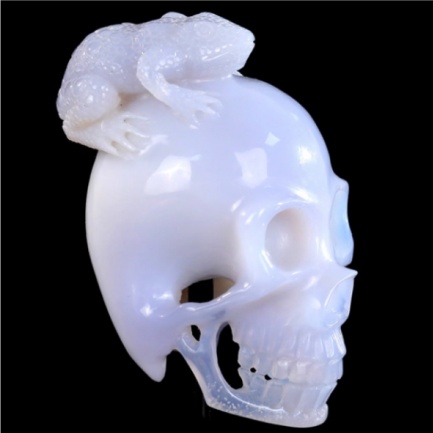
A high polish finish increases sensitivity to micro-scratches during shipping. If you are selling Featured Skulls as premium items, packaging is part of the product experience.
Consider specifying:
individual protective film or wrapping method
foam cut-outs for movement control
separation layers to avoid crystal-to-crystal contact
outer carton drop protection
This is one of the simplest ways to reduce after-sales complaints.
A common mistake is trying to approve everything at once. We recommend a staged approval:
Material + color sample (small block or simple piece)
Shape + detail sample (skull carving prototype)
Finish confirmation sample (final polish style)
Pre-production batch confirmation (small quantity)
This approach reduces rework and helps you lock a repeatable standard early.
Use this table to prepare your inquiry:
Spec item | What to provide | Why it matters |
Material | name + clarity level | controls transparency and look |
Inclusion tolerance | low/medium/natural | avoids disputes |
Color | reference sample + tone range | improves batch consistency |
Finish | high polish / satin / matte / mixed | defines product positioning |
Size | mm + tolerance | packaging and consistency |
Detail priorities | teeth, eyes, symmetry | preserves skull identity |
Quantity | MOQ and batch plan | affects consistency and cost |
Packaging | protection level | prevents scratches and chipping |
For natural materials, perfect uniformity is unrealistic. The better goal is controlled consistency within an approved range.
High polish is premium, but it’s not always the best match for every market. Matte or mixed finishes can look more modern, hide fingerprints, and create a unique signature.
Clarity is important for some collections, but certain buyers prefer natural inclusions and internal patterns because they look authentic and unique.
A successful Featured Skulls custom order depends on how well you specify three core things: material, color, and finish. Material determines clarity and internal character. Color defines mood and collection identity. Finish decides whether the piece reads as luxury, lifestyle décor, or themed art. When you define these clearly—with inclusion tolerance, tone range, and finish style—the production process becomes smoother, approvals become faster, and batch-to-batch consistency improves. Most importantly, you reduce avoidable misunderstandings and create a product that your customers will immediately recognize as premium.
If you are planning a new Featured Skulls collection or refining an existing line, you can learn more at www.crystallumi.com. You are also welcome to contact our team to discuss material options, finish recommendations, and practical specifications that match your target market and budget—so your custom skull carvings arrive with the look and consistency your brand promises.
Define the crystal material name, clarity level (clear/semi-clear/translucent), and inclusion tolerance. Also specify restrictions like no surface-reaching cracks or no dark spots on face areas.
Natural crystal can vary by batch due to mineral composition and internal structure. Using an approved reference sample and defining an acceptable tone range helps control consistency.
High polish is popular for premium collections because it maximizes clarity and shine, but mixed finishes can create signature contrast and matte finishes can suit modern décor styles.
Include material clarity, inclusion tolerance, color tone range, finish type, size tolerance, priority detail zones (teeth/eyes), and packaging protection requirements.


