Quote
Subtotal: $0

Views: 0 Author: Site Editor Publish Time: 2025-09-29 Origin: Site
Crystal skulls serve multiple purposes in society. Many people see them as spiritual tools for healing and meditation. Museums in London and Paris display famous examples, while others have appeared in Guatemala and Texas. Some claim ancient origins for these artifacts, often linking them to the Maya or Aztec civilizations. Scientists question their authenticity and study their materials to learn more about their history.
Crystal skulls are often seen as spiritual tools for healing and meditation, helping users create a peaceful atmosphere.
Many people use crystal skulls during meditation to enhance focus and connect with their inner thoughts.
Scientific studies reveal that most crystal skulls were made in the 19th century, challenging claims of ancient origins.
Crystal skulls symbolize human consciousness and the mysteries of life, connecting people to ancient wisdom.
The market for crystal skulls is growing, with collectors valuing their beauty and mysterious reputation.
Many people believe that crystal skulls possess unique healing properties. Supporters claim these objects can balance energies and promote emotional well-being. Some individuals use crystal skulls to enhance psychic abilities, such as intuition and spiritual awareness. Practitioners often place crystal skulls in their homes or healing spaces, hoping to create a peaceful atmosphere. They say the skulls emit energy that helps with meditation and manifestation.
Note: Scientists have not found evidence that crystal skulls can heal physical or mental ailments. Most studies focus on the materials and craftsmanship rather than energy properties.
Crystal skulls play a role in meditation for many spiritual seekers. People use them as focal points during meditation sessions. They believe the skulls help quiet the mind and deepen concentration. Some practitioners hold a crystal skull or place it nearby while meditating. They report feeling more relaxed and connected to their inner thoughts. The maya and other ancient cultures inspire these practices, as many believe the skulls link them to ancient wisdom.
Meditation with crystal skulls may include:
Setting intentions for personal growth
Visualizing energy flowing through the skull
Seeking guidance from spiritual sources
In New Age communities, crystal skulls have gained popularity as tools for spiritual awakening. Many people believe these objects can raise consciousness and facilitate transformation. Practitioners use crystal skulls in rituals and ceremonies, especially during cosmic events or initiations. Some claim the skulls help channel spiritual energy, supporting healing and personal development. The maya legends often appear in these beliefs, connecting the skulls to ancient mysteries.
Common spiritual uses in New Age practices:
Enhancing psychic abilities like clairvoyance and telepathy
Facilitating spiritual growth and higher awareness
Participating in group ceremonies for collective energy
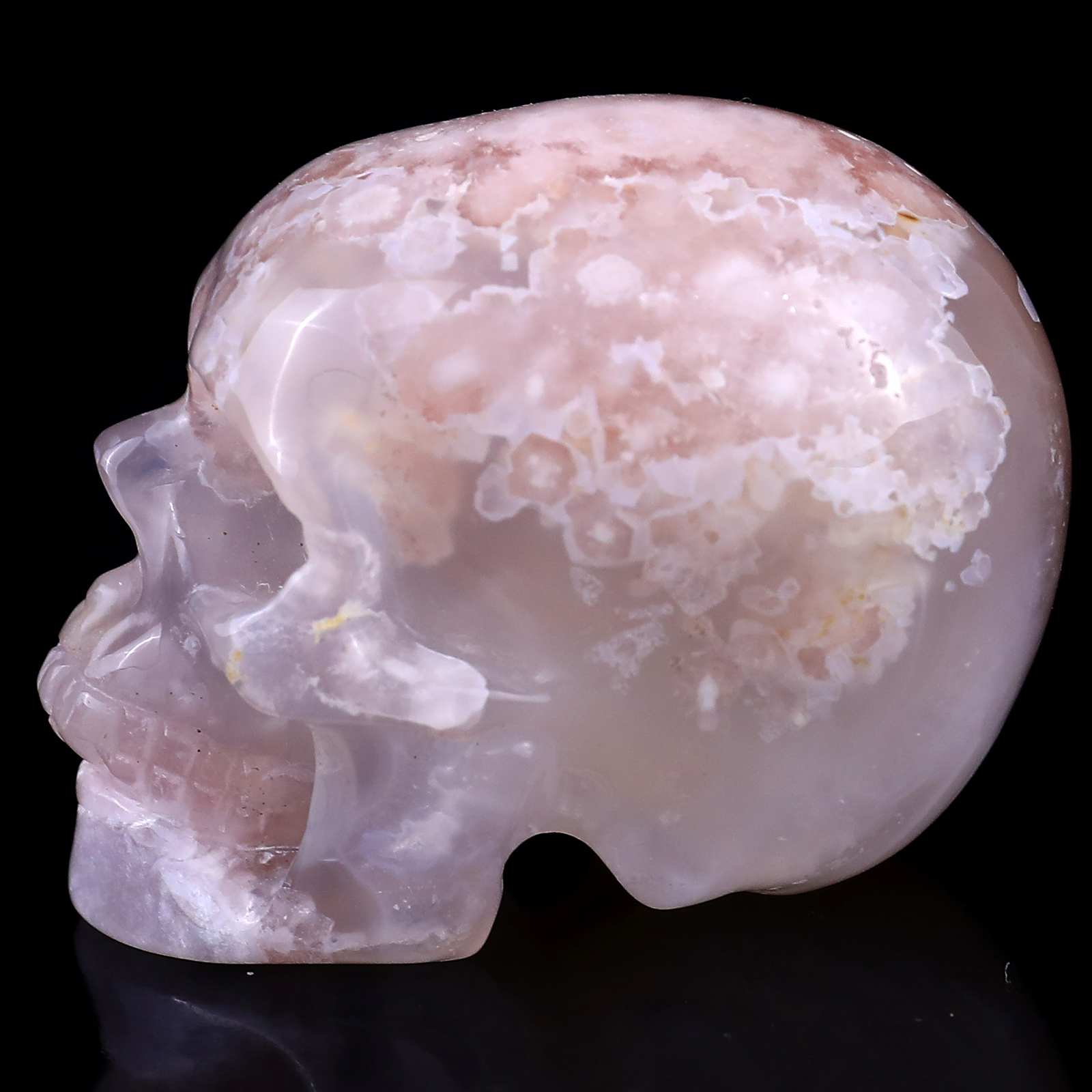
Mesoamerican crystal skulls hold deep symbolic meaning in local traditions. Many indigenous groups see these objects as powerful symbols of human consciousness and the mysteries of life. Some elders believe the skulls act as gateways to other dimensions, connecting people to the essence of creation. The skulls often represent the possibility of awakening new levels of awareness. In some stories, they serve as reminders of the connection between all living things and the universe.
Crystal skulls symbolize:
Human consciousness and potential
Access to ancient wisdom
The unity of life and creation
People in the region have long associated crystal skulls with sacred rituals. Stories describe their use in ancient Maya temples and ceremonies. Many believe the skulls can transmit energy and hold magical healing powers. Rituals often involve placing the skulls at sacred sites or using them to focus spiritual energy. Some legends claim that uniting thirteen skulls could reveal secrets to save the Earth.
Indigenous communities sometimes use crystal skulls in ceremonies to seek guidance, healing, or protection. These rituals reflect a belief in the skulls' ability to connect with spiritual realms.
Local legends about crystal skulls add to their mystery. Some tales describe their discovery near ancient ruins, while others suggest they hold messages from the past. Many people believe the skulls contain ancient wisdom and can help humanity survive difficult times. However, scientific studies challenge these stories. Researchers from the British Museum found that most crystal skulls were made in the 19th century, likely in Germany, using modern tools. The materials often come from Brazil, not Mesoamerica. No archaeological evidence supports the idea that these skulls came from ancient sites, and the famous Mitchell-Hedges skull lacks proper documentation of its origin.
Main arguments from experts:
The skulls do not match ancient carving techniques.
Materials and tool marks suggest modern manufacture.
No crystal skulls have been found in controlled archaeological digs.
Art historians examine crystal skulls by comparing their manufacturing techniques and materials to those of authentic Mesoamerican artifacts. They use detailed analysis to determine the origins and artistic value of each piece. The table below highlights key differences:
Aspect | Crystal Skulls | Mesoamerican Artifacts |
|---|---|---|
Manufacturing Techniques | Carved with rotary wheels | Worked with stone and wood tools |
Abrasives Used | Hard abrasives like corundum or diamond | Natural abrasives, no evidence of wheels |
Provenance | Likely from Europe, 19th century | Securely dated to pre-Columbian era |
Material Analysis | Quartz from Brazil or Madagascar | Local materials from Mesoamerica |
Historical Context | Rejected as modern by Museo Nacional de Mexico | Supported by archaeological evidence |
Art historians value the craftsmanship of crystal skulls for their intricate carving and polished surfaces. However, most experts agree that the use of modern tools sets them apart from genuine maya artifacts.
Collectors seek crystal skulls for their beauty and mysterious reputation. The market for these objects has grown rapidly. In 2023, the crystal skull market reached an estimated value of $220 million. Experts predict a compound annual growth rate of 6.8% through 2028. Collectors look for ethically sourced stones, personalized carvings, and unique hybrid designs.
Many collectors display crystal skulls as conversation pieces.
Some value them for their connection to ancient legends.
Others focus on the artistic techniques used to create each skull.
Note: Museums and private collectors often debate the authenticity of crystal skulls, which affects their market value.
Crystal skulls appear in many forms of popular culture. Artists such as Ai Weiwei and Marina Abramovic use crystal in their work to explore themes of luxury and spirituality. Exhibitions like "Crystals in Art: Ancient to Today" showcase the influence of crystal skulls across history. In movies, books, and games, these objects often play a central role:
The film "Indiana Jones and the Kingdom of the Crystal Skull" features a fictional story about their origins.
Video games such as "Legend of the Crystal Skull" and "Assassin's Creed" include quests involving crystal skulls.
Television shows like "Stargate SG-1" and "American Dragon: Jake Long" use crystal skulls as plot devices.
Crystal skulls continue to inspire artists and storytellers, blending ancient mystery with modern creativity.
Scientists have questioned the authenticity of crystal skulls for decades. Researchers use advanced tools to examine these objects and determine how and when they were made. They focus on the surface of the skulls, looking for marks left by carving tools. The following table shows some of the main scientific methods used to study crystal skulls:
Method | Description |
|---|---|
Scanning Electron Microscope | Examines tool marks on the crystal surface to identify carving techniques. |
Tool Mark Analysis | Looks for irregular grooves that suggest primitive or modern carving tools. |
These methods help experts decide if a skull was made with ancient or modern technology. For example, the British Museum and Smithsonian Institution both used these techniques. Their studies found that most crystal skulls show signs of rotary wheels and modern abrasives. These tools did not exist in pre-Columbian Mesoamerica. Jane MacLaren Walsh, an anthropologist at the Smithsonian, examined two famous skulls and found evidence of 19th-century tools. This suggests that the skulls are not ancient artifacts but modern creations.
Many crystal skulls have been exposed as hoaxes. Scientific tests reveal that most of these objects were made in the 19th century, not by ancient civilizations. Museums and experts have identified several key points:
Many crystal skulls are modern creations or hoaxes.
The British Museum and Smithsonian Institution found that these skulls were likely made in Europe.
Tests from the 1980s showed microscopic tool marks from rotary cutting tools.
These tools only appeared in Central America after the Columbian period.
Material analysis also supports these findings. Scientists used X-ray diffraction and surface analysis to study the composition of the skulls. The table below summarizes some important results:
Evidence Description | Findings |
|---|---|
X-ray diffraction analysis | Revealed the mineral content and possible origin of the quartz. |
Surface analysis of the Quai Branly skull | Showed machine tool markings, suggesting a modern origin. |
Smithsonian and British Museum skulls | Optical microscopy and SEM revealed rotary wheel carving. |
Microscopic analysis of the Smithsonian skull | Confirmed rotary wheel use in carving. |
X-ray diffraction of a deposit in the skull | Found silicon carbide, a modern synthetic material. |
These results show that the quartz used in many skulls comes from Brazil or Madagascar, not Mesoamerica. The presence of modern materials and tool marks proves that most crystal skulls are not ancient.
Researchers continue to investigate the origin of crystal skulls. They use a range of scientific techniques, such as radiocarbon dating, spectroscopy, and microscopic examination. Comparative studies help experts spot patterns among skulls from different collections. The most frequently cited sources in academic research include Jane MacLaren Walsh's article in Archaeology magazine and findings published in the Journal of Archaeological Science.
The Mitchell-Hedges Skull is one of the most famous examples. Many people once believed it was an ancient artifact. However, records show that it was purchased at an auction in 1943. There is no mention of the skull in Mitchell-Hedges' earlier writings, which raises doubts about its ancient origin. Jane MacLaren Walsh's research concluded that all known crystal skulls were made in Mexico during the 19th century. No reliable evidence links these skulls to the Maya or other pre-Columbian cultures.
Several controversies surround the dating and analysis of crystal skulls:
The British Museum skull likely dates to the 19th century, not the pre-Columbian era.
Modern tool marks, such as those from rotary wheels, appear on many skulls.
Quartz used in the skulls often comes from outside Mesoamerica.
The style of the skulls does not match known Aztec or Mixtec art.
Historical records suggest German workshops produced these skulls for European collectors.
Note: Researchers also study the cultural context of crystal skulls, exploring their links to ancient rituals and spiritual beliefs. However, scientific evidence does not support claims of ancient origins.
The debate over the authenticity and origin of crystal skulls continues. Most experts agree that these objects are products of modern craftsmanship, not relics from ancient civilizations.
Many people believe that crystal skulls come from pre-columbian mesoamerican cultures. Scholars have examined historical records and artifacts to test these claims. Archaeologists found only one carved crystal artifact from a pre-Columbian dig—a goblet at Monte Albán. This goblet showed rough tool marks, which differ from the smooth finish seen on crystal skulls. Most genuine Mesoamerican crystal artifacts are small, such as beads or ornaments, not large skulls. The Smithsonian Institution studied a crystal skull bead and determined it was a modern creation.
The British Museum and Smithsonian Institution both acquired large crystal skulls with unclear histories. The Smithsonian’s skull arrived in 1992 with little documentation, only stating it was purchased in Mexico City in 1960. This lack of provenance makes it difficult to link these skulls to ancient cultures. Scientific studies show that all examined crystal skulls were made in the mid-19th century or later. Claims about mystical powers do not appear in authentic Mesoamerican mythologies.
Archaeologists note that no quartz skulls have been found in well-documented excavations. The sudden appearance of many skulls in the late 19th century matches a rise in European interest in ancient civilizations.
Experts continue to debate the authenticity of crystal skulls. Investigations reveal that many skulls were crafted using modern tools, such as rotary wheels and synthetic abrasives. These tools did not exist in ancient Mesoamerica. For example, a skull sent to the Smithsonian showed size and proportion differences compared to genuine artifacts. Scientific analysis confirmed that some skulls used Brazilian rock, not Mexican quartz.
Archaeologists use several criteria to distinguish authentic artifacts from later reproductions:
Criteria | Description |
|---|---|
Provenance | Documented physical history of the skulls, which is often lacking for many purported ancient skulls. |
Stylistic traits | Examination of the artistic style that aligns with known pre-Columbian artifacts. |
Technical aspects | Analysis of the tools and techniques used in the creation of the skulls, which can indicate authenticity. |
Experts use optical microscopy and scanning electron microscopy to study the surface of crystal skulls. Elastic Recoil Detection Analysis helps measure material properties. These methods show that most skulls were made in the 19th century. Museums have tried to verify the origins of these skulls, but results remain uncertain.
Many scholars remain skeptical about the classification of crystal skulls as genuine pre-Columbian artifacts. The skills and technology needed to create them seem beyond what ancient artisans possessed.
Crystal skulls continue to spark curiosity and debate. Museums display them as mysterious artifacts, yet scientists question their origins.
"Crystal skulls are a fascinating example of artifacts that have made their way into museums with no scientific evidence to prove their rumored pre-Columbian origins," said Walsh.
Researchers compare surface marks and mineral composition, finding modern techniques and materials. People use crystal skulls for meditation, reflection, and spiritual growth. The ongoing controversy blends myth, science, and pop culture, making crystal skulls a unique part of history.
Crystal skulls usually consist of clear or milky quartz. Some artists use other stones, but quartz remains the most common material. Museums display crystal skulls carved from large quartz blocks.
Most experts agree that crystal skulls do not come from ancient civilizations. Scientific studies show that modern tools created these skulls in the 19th century. No crystal skulls have been found in controlled archaeological digs.
Many people believe crystal skulls can balance energy or support healing. Scientists have not found evidence for these claims. Crystal skulls serve as spiritual tools for meditation and reflection.
Museums display crystal skulls because they spark curiosity and debate. These objects show how myths and modern craftsmanship blend together. Visitors learn about the controversy over their origins.
Researchers use microscopes and material analysis to study crystal skulls. They look for tool marks and mineral sources. These tests help experts decide if a skull is ancient or modern.


